How I led the modernization and migration of a 10+ year legacy Executive Education platform while preserving search visibility, improving maintainability, and delivering a scalable digital experience.
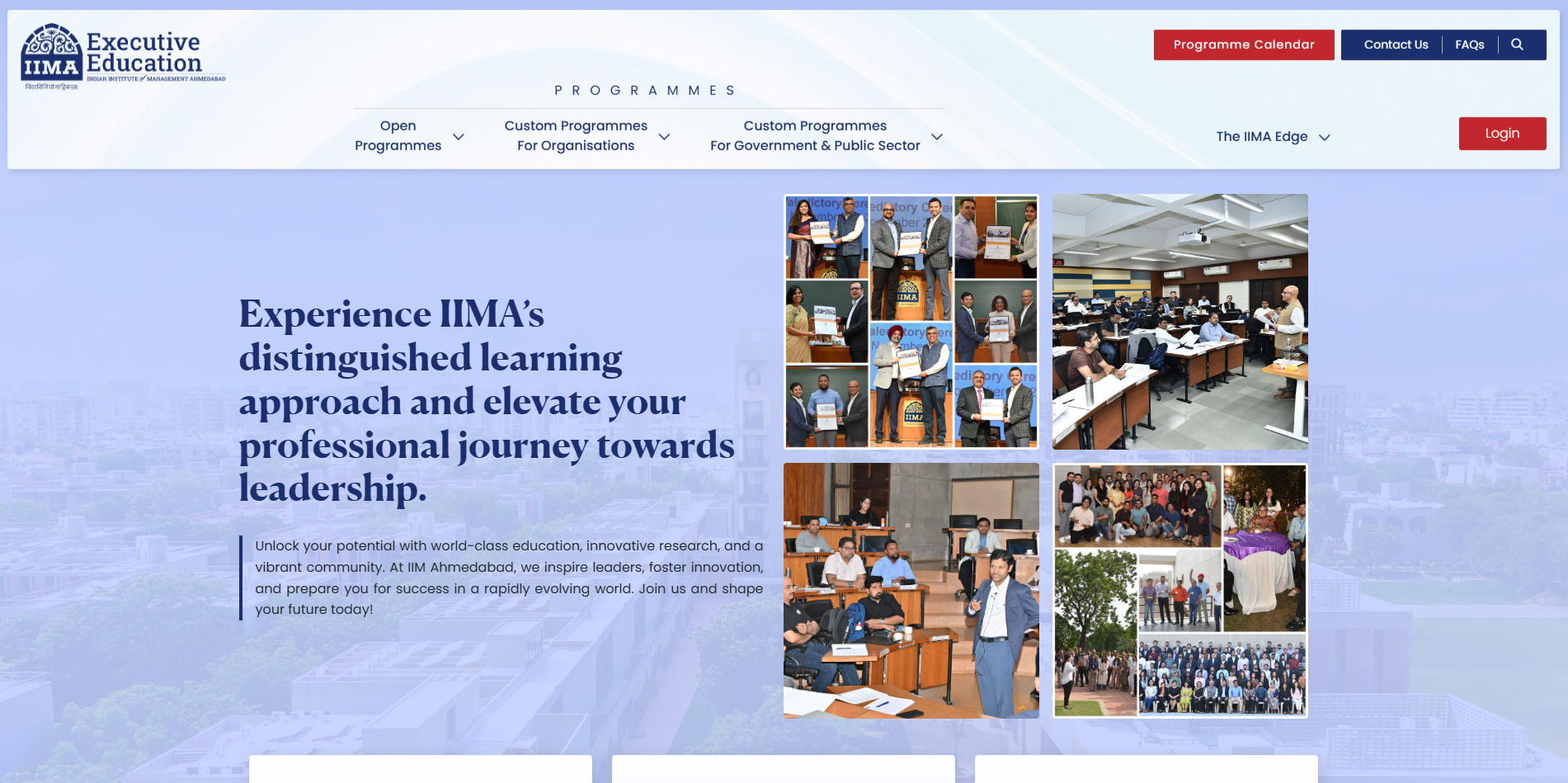
The IIM Ahmedabad Executive Education (ExEd) platform is the primary digital gateway for professionals, business leaders, government officials, and organizations seeking world-class executive education programmes.
As part of a major digital transformation initiative, I led the development team in modernizing the platform, planning the migration of a 10+ year legacy website, and implementing SEO-aware migration practices to support a smooth transition while improving scalability, maintainability, and user experience.
My responsibilities included technical planning, development coordination, code reviews, deployment management, and stakeholder collaboration to ensure the successful delivery of a modern enterprise web platform.
This project wasn’t just about building a website—it was about modernizing a decade-old digital platform while carefully managing migration risks, preserving search visibility, and delivering a scalable solution for future growth.
Modernizing an enterprise website is far more than a visual redesign. The existing Executive Education platform had evolved over more than a decade, containing a large volume of programme information, public pages, and search engine indexed content. Every migration decision had to balance technical improvements with business continuity, user experience, and search engine visibility.
Migrating years of programme pages,media assets, and structured content without losing information.
Planning URL mapping, 301 redirects, metadata preservation, and sitemap updates to support search visibility.
Ensuring users could continue accessing programmes with minimal disruption during migration.
Working closely with stakeholders, content teams, and developers to validate content and deliver a smooth launch.
One of the most rewarding aspects of this project was successfully leading the migration of a legacy website that had been online for more than ten years. The migration required careful planning, structured URL mapping, SEO-aware implementation, and rigorous quality assurance to support a smooth transition while modernizing the platform for future growth.
Successfully migrating a legacy enterprise website required more than technical implementation. The project followed a structured approach that balanced business continuity, technical quality, SEO considerations, and stakeholder collaboration. Each phase was carefully planned to minimize risks while delivering a modern and scalable platform.
Reviewed the existing platform, analyzed content structure, identified legacy URLs, and understood business requirements before planning the migration.
Prepared URL mapping, content migration strategy, redirect planning, and deployment approach while coordinating with stakeholders.
Led development activities, implemented new features, improved content management workflows, and modernized the overall architecture.
Implemented URL mapping, permanent redirects, metadata preservation, sitemap updates, and technical SEO validation to support a smooth transition.
Conducted functional testing, content verification, responsive testing, broken-link checks, and stakeholder reviews before launch.
Managed production deployment, verified redirects, monitored search indexing, resolved post-launch issues, and supported continuous improvements.
The platform was developed using modern web technologies with a strong focus on maintainability, scalability, security, and long-term support. The selected technology stack provided flexibility for future enhancements while ensuring a reliable experience for both users and administrators.
The successful delivery of the IIM Ahmedabad Executive Education platform represented more than a website redesign. It involved modernizing a long-standing enterprise platform while carefully managing technical complexity, business continuity, and migration planning.
As Team Lead, I coordinated development activities, contributed to technical implementation, collaborated with stakeholders, and supported the transition from the legacy platform to a modern, scalable solution.
The project also emphasized SEO-aware migration practices, responsive design, improved content management, and long-term maintainability to support future growth.
Beyond building features, I had the opportunity to lead the technical delivery of a business-critical platform, guide the migration of a 10+ year legacy website, collaborate with multiple stakeholders, and help deliver a modern digital experience designed for long-term scalability and maintainability. This project strengthened my expertise in enterprise web development, technical leadership, and SEO-aware migrations.
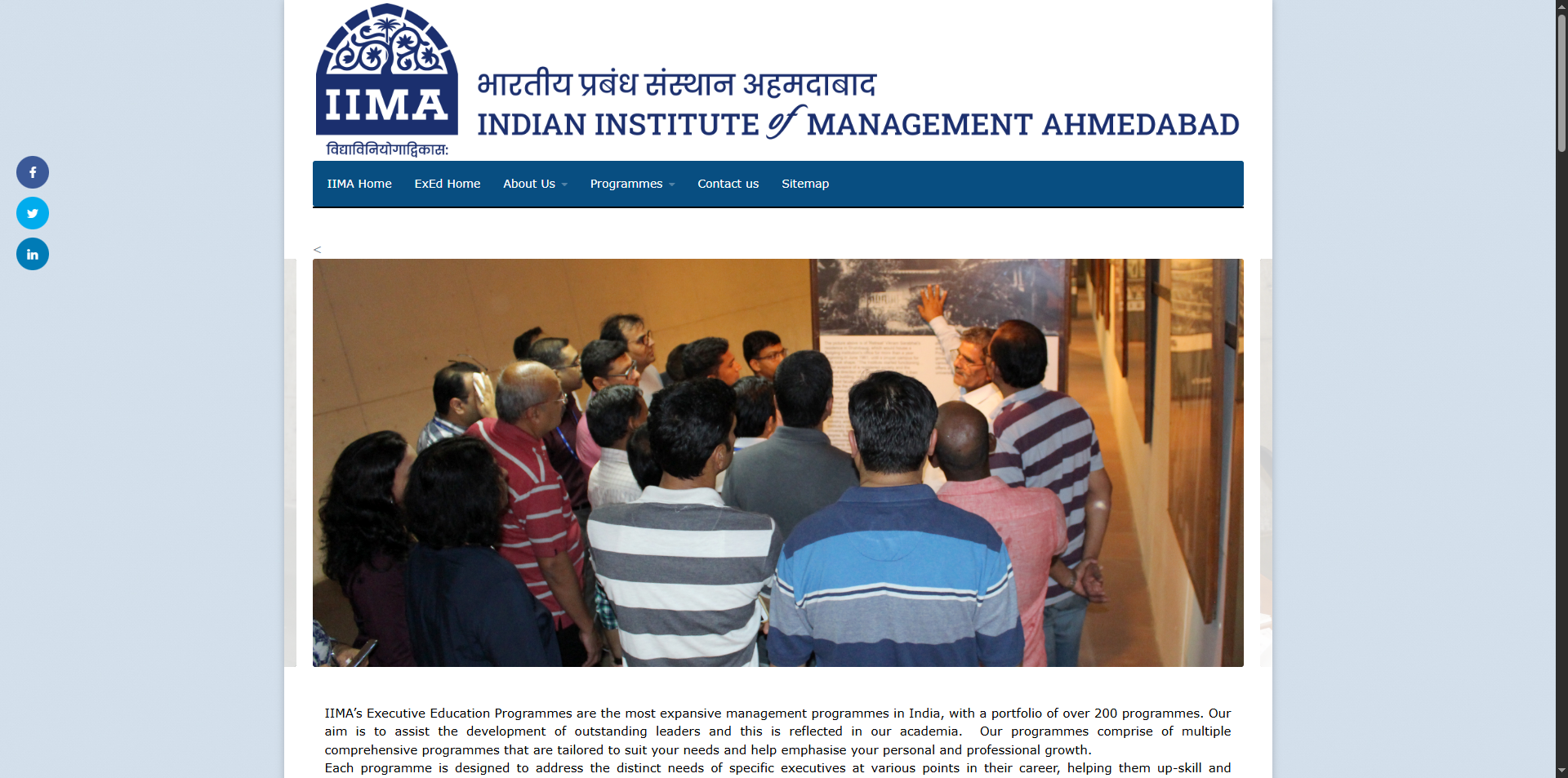
The following screenshots showcase key areas of the Executive Education platform, highlighting the modern user interface, programme discovery, registration workflows, and responsive design implemented during the project.
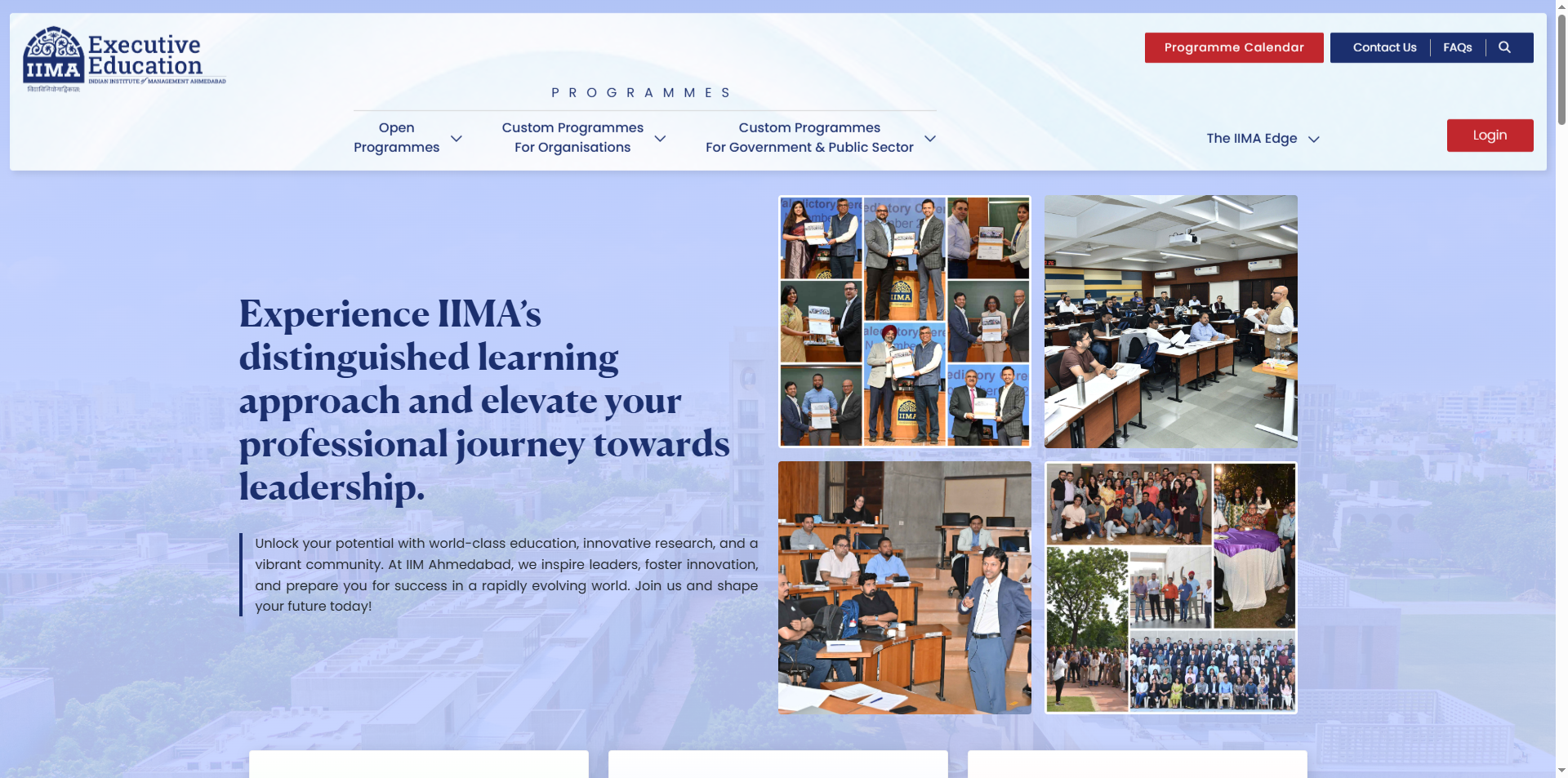
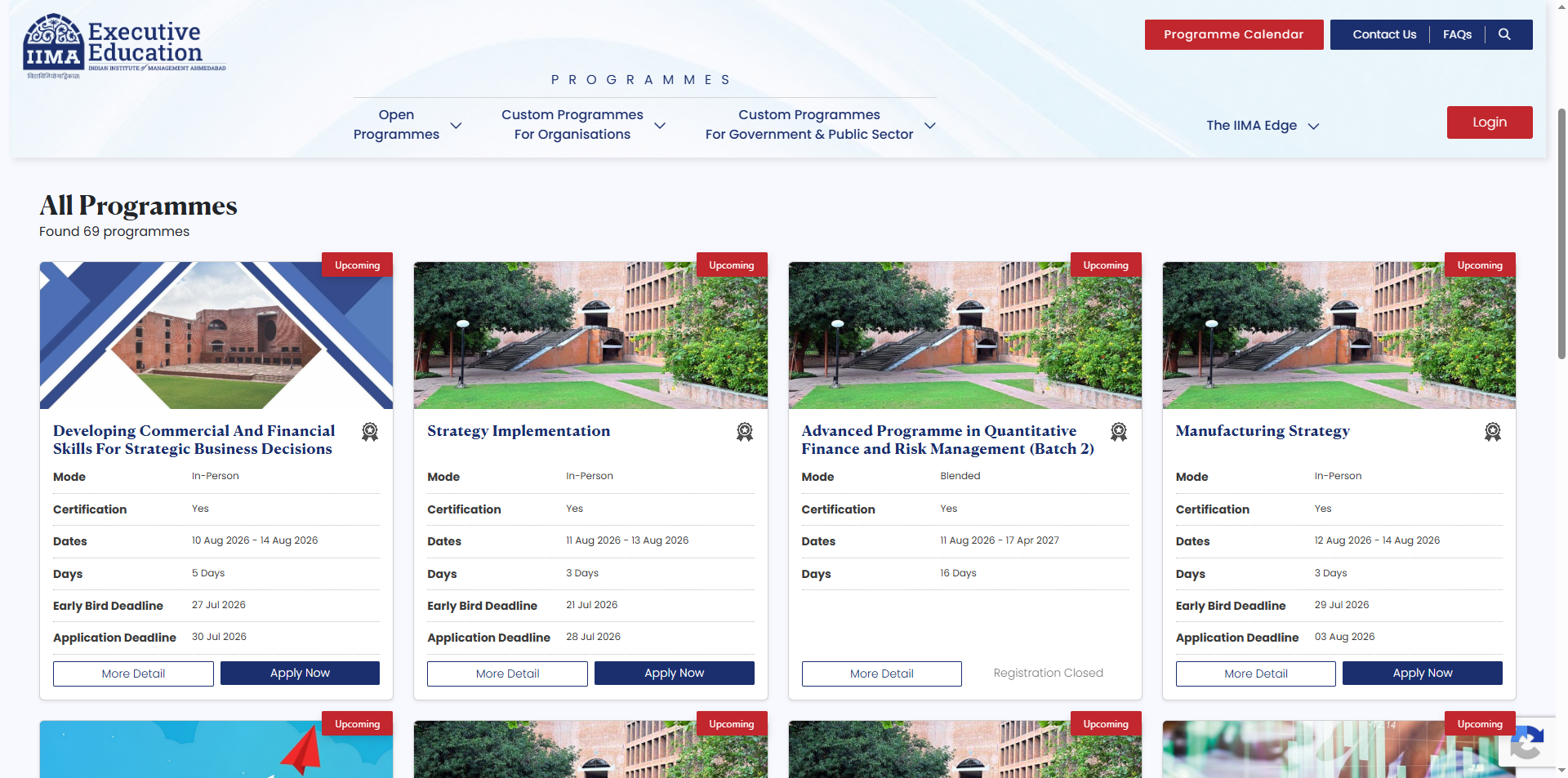
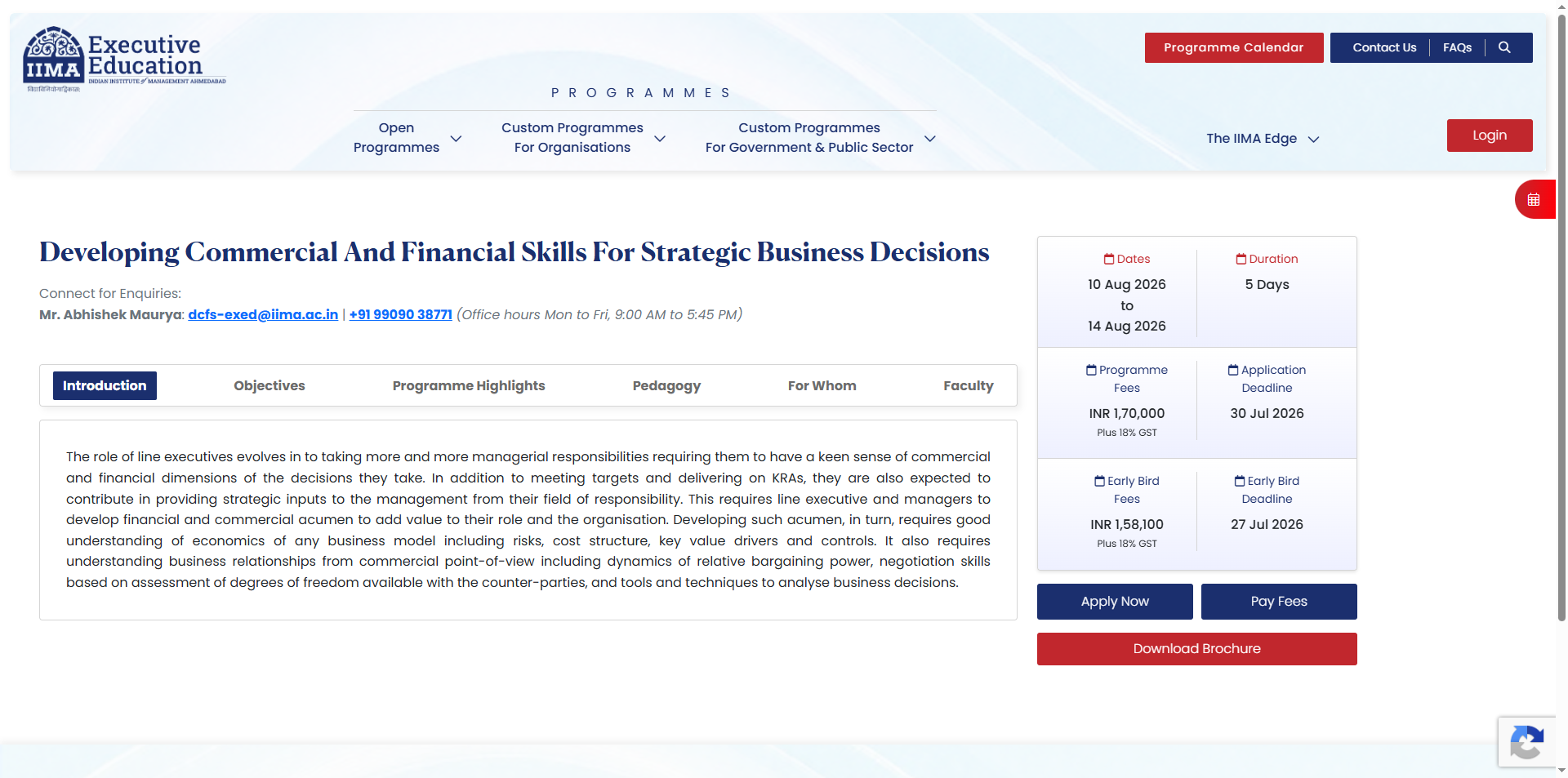
The Executive Education platform was modernized to provide a cleaner user interface, improved navigation, responsive layouts, and a scalable foundation for future enhancements. While preserving business continuity, the project focused on delivering a better experience for users and administrators.
Every enterprise project presents unique technical and business challenges. Leading the modernization of the Executive Education platform reinforced the importance of structured planning, stakeholder communication, quality assurance, and long-term thinking. Beyond writing code, the experience strengthened my ability to deliver solutions that align technical decisions with business objectives.
Below are some of the most common questions about my role, the technologies used, and the approach followed during the modernization of the Executive Education platform.
I worked as the Team Lead and Senior PHP/Laravel Developer, contributing to technical planning, feature development, code reviews, deployment coordination, and collaboration with stakeholders throughout the modernization of the Executive Education platform.
The platform had evolved over more than ten years and required careful migration planning, structured URL management, content verification, responsive redesign, and coordination across multiple stakeholders. The objective was to modernize the platform while supporting business continuity and following SEO-aware migration practices.
The platform was developed using Laravel, PHP, MySQL, JavaScript, Bootstrap, HTML, CSS, Git, and Linux, providing a scalable and maintainable enterprise web solution.
SEO considerations were included throughout the migration planning process by reviewing URLs, planning redirects where appropriate, preserving metadata where applicable, validating internal links, and conducting post-launch verification to support search visibility.
My responsibilities included technical planning, task coordination, development support, code review, deployment planning, stakeholder communication, quality assurance, and ensuring the successful delivery of the project.
One of the biggest lessons was that successful enterprise modernization depends as much on planning, communication, and stakeholder alignment as it does on technical implementation. Careful preparation significantly reduces project risks.
Yes. My experience includes leading enterprise web development projects, coordinating technical teams, implementing Laravel-based solutions, supporting legacy platform modernization, and delivering scalable applications with a strong focus on maintainability.
Yes. I am open to discussing opportunities involving enterprise web development, Laravel architecture, digital transformation, technical leadership, website modernization, and high-performance PHP applications.
If you’d like to know more about my experience with Laravel, enterprise web applications, website modernization, SEO-aware migrations, or technical leadership, feel free to contact me. I’m always happy to discuss technology, architecture, and digital transformation projects.
Looking for a reliable developer to build, upgrade, or optimize your web applications? Let's discuss how I can help transform your ideas into scalable LMS, CRM, and enterprise solutions.